
RIJKSMUSEUM ARCHITECTURE
About Rijksmuseum
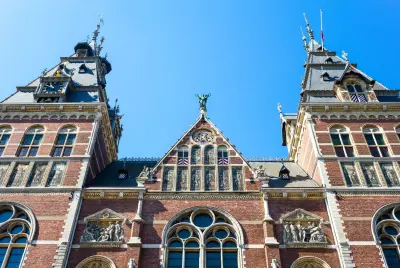
The Rijksmuseum is one of the Netherlands’ most important 19th century monuments. This monumental building, featuring Cuyper’s original design, which combined Gothic and the Renaissance styles, is the largest museum in the Netherlands and houses more than 8,000 works of art by Dutch artists, including masterpieces by Rembrandt, Van Gogh, and Vermeer. The Museum has been a national heritage site since 1970 and was listed among the Top 100 Dutch heritage sites in 1990.

The architect Pierre Cuypers
Pierre Cuypers, the architect of the Rijksmuseum, came from a Dutch Catholic family. His father was a church decoration painter, and Pierre grew up as a devoted Catholic. His portfolio includes the design of many Neo-Gothic churches. Cuypers wasn’t the first choice for the project – the initial design proposal was abandoned due to the expense and unsuitability.
Cuypers created a building in a Neo-Gothic style, blending elements of Renaissance and Gothic style. The building demonstrates his belief that different art forms should come together to enrich architecture. The sculpture of Cuypers can be seen among the decorations on the building’s exterior.

The design
The Museum’s design reflects and celebrates the rich cultural heritage of the Netherlands, with Cuypers creating a highly decorated Neo-Gothic architectural style that mixes Gothic and Renaissance elements. The exterior is made of red brick, limestone, and terracotta. It features pointed arches, detailed stone carvings, intricate decorations, a steep roof with decorative gables, and a wide tunnel that runs through the center of the building.
Inside, there are high vaulted ceilings, large galleries, tile murals, walls and ceiling decorations, and stained glass windows. The Museum has over 80 rooms displaying a wide range of art. The three most important rooms in the museum are the Great Hall, the Gallery of Honor, and the Night Watch Gallery. A similar example of Cuypers’ architectural vision is Amsterdam’s Central Railway Station.

The controversy
The appointment of Cuypers as the lead architect was controversial, reflecting the Catholic Church’s rising influence in a mainly Protestant country. Questions about whether a Catholic architect should lead such an important national project were raised. Cuypers faced criticism from some Protestant groups who felt the Gothic style was too Catholic and would dominate over the Dutch Renaissance. After approval, Cuypers modified the design to include more Gothic elements and fewer Renaissance ones.
Construction process
The current Rijksmuseum building was constructed over 9 years, from 1876 to 1885. More than 8,000 piles had to be driven into the ground to support the building. As Amsterdam is positioned below sea level, most of the buildings are built on platforms made of wood. The wooden piles still support the building.

The Great Hall
The Great Hall is a spacious exhibition area with a mosaic floor, large stained glass windows, and a beautifully decorated vaulted ceiling. It’s a key part of the museum that presents the history of the Dutch people through art and connects to the Gallery of Honor. After restoration, it returned to its original 1880s design, with a vaulted roof that let in natural light. The stained glass windows highlight the three greatest arts: painting, architecture, and sculpture, with architecture regarded as the highest by Cuypers.
The paintings in the Great Hall look like frescoes but are actually on canvas, showing various virtues and scenes from Dutch history. The floor features images representing earthly life, including the cycles of nature, the sun, the moon, and the zodiac. Heavy curtains once hid the side galleries, leading visitors to Rembrandt’s famous painting The Night Watch.

Gallery of Honour
One of the museum’s main rooms celebrates the artwork created during the 17th century Dutch Golden Age. It’s a long corridor filled with artwork that leads visitors to the Night Watch Gallery. Its design resembles a Gothic cathedral, with semi-circular sections above that display the coats of arms of the eleven Dutch provinces with their capitals.
Gardens – outdoor museums
Cuypers designed the gardens around the Rijksmuseum to present different historical garden styles. He wanted to create an outdoor museum that included parts of historical structures. The large Caucasian wingnut tree in front of the museum has been there since the beginning.

The Night Watch Gallery
The Night Watch Gallery is specially designed to display one of the most famous Dutch Golden Age paintings, Rembrandt’s iconic The Night Watch. The large painting from 1642 is the room’s focal point and is strategically positioned as the centerpiece. The Gallery has its own exit space for the painting – in 1934, a slit was cut in the floor for the painting to pass through if necessary. On the gallery’s roof are four figures of women on a high pedestal representing four phases of the day. The lighting in the gallery was carefully designed to present the painting in the best way, highlighting its details and colors.
Cuypers Library
Cuypers envisioned a museum that would be used not only as a viewing space but also as a place of learning, which is why he included a library in its design. It has become the Netherlands’ largest art historical library, containing around 450,000 items for public study, with a portion of its collection stored in tunnels below. The library has a grand symmetrical design, with a spiral staircase and high pillars emphasizing its height and the wrought iron railings, which were popular then. The light-colored upper walls add brightness.

A decade of restoration
Over the years, the Rijksmuseum has experienced a rise in visitors from all over the world. To improve the visitors’ experience and allow for the growing number of guests, a major renovation project began in 2003. The transformation from a 19th century building into a 21st century museum lasted 10 years and focused on preserving the original design while adding 3,000 square meters of exhibition space.
The new look of the Rijksmuseum, unveiled in 2013, was the product of a Spanish architect, Juan Trias de Bes, who worked on the initial idea, and the Spanish architects Cruz and Ortiz, who carried out the renovations. Gerrit Rietveld, an influential member of the De Stijl movement, also contributed to the museum’s new design by promoting practical design while respecting its historical background.
Want to explore Rijksmuseum’s architecture & art?

Crowd-free experience
Rijksmuseum Small-Group Tour
Join our guided tour of the Rijksmuseum and explore the rich history of Dutch art and culture. View the masterpieces of the Dutch Golden Age, including Rembrandt's "The Night Watch", Van Gogh's self-portrait, Vermeer's and Jan Steen's paintings, and many more masterpieces from the museum's 8,000 artworks. Your guide will lead you to see the main exhibits and explain the history behind the art.

Rijksmuseum Private Tour
Explore the Rijksmuseum and 17th century Dutch Masters on a personalized tour. Avoid the crowds and enjoy an exclusive experience with a private guide as you view famous paintings by artists like Rembrandt, Van Gogh, and Vermeer. Learn about the techniques and symbolism in their art, and hear stories from their lives. Enjoy tailored attention during your tour, explore at your own pace, and focus on the art pieces that interest you most.